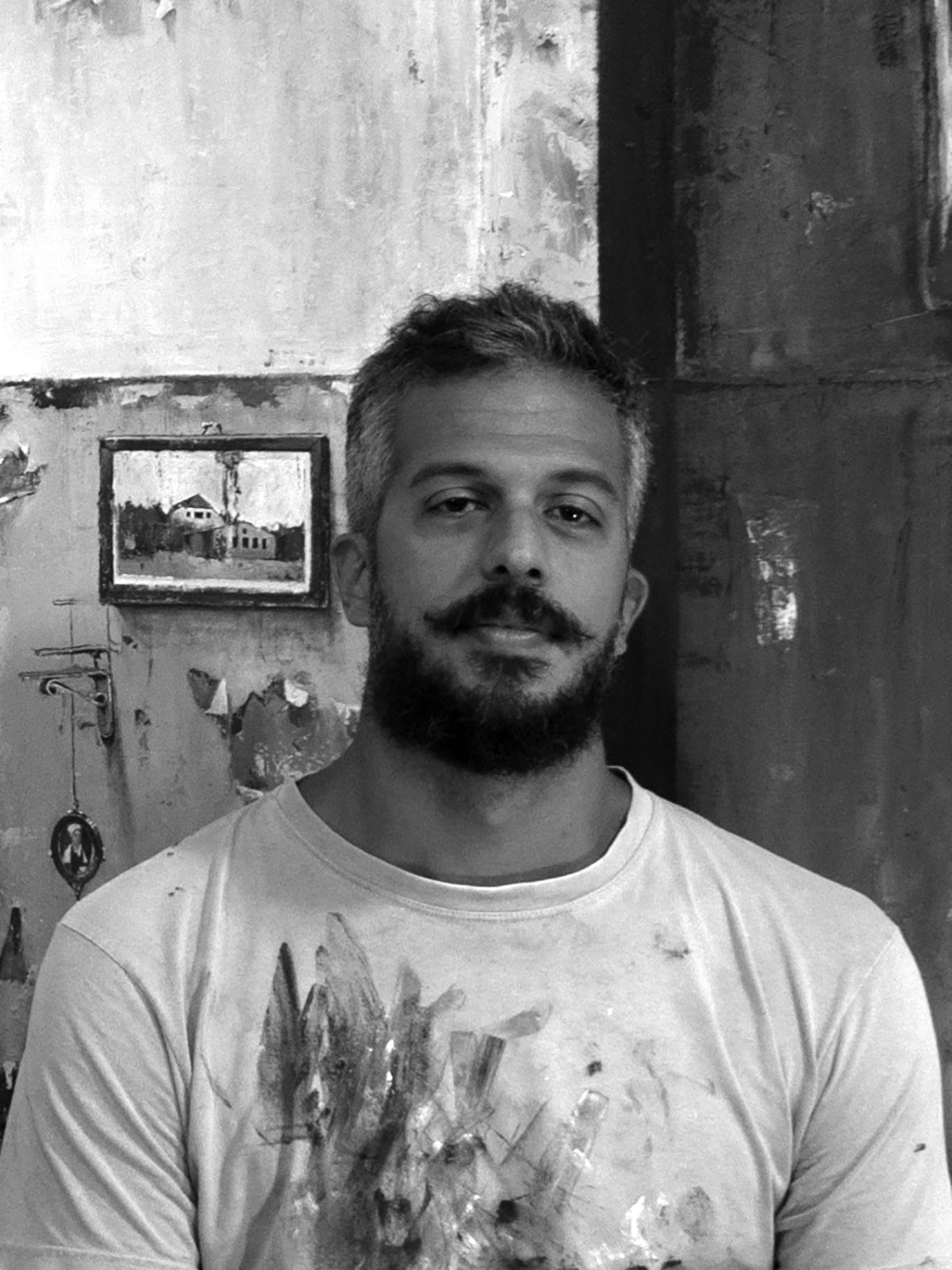
André Griffo
1979 | Barra Mansa-RJ, Brazil | Lives in Rio de Janeiro-RJ, Brazil
SOBRE | DEPOIMENTO
He is an artist. He graduated in architecture and urbanism from Universidade Santa Úrsula (2004) and has been solely dedicated to art since 2009. He works with painting, installation and drawing, exploring fissures in the fabric of Brazilian society. To this end he draws on historical and iconographic references from Brazil’s recent and remote past. Prominent among his individual exhibitions are Objetos sobre Arquitetura Gasta [Objects on Worn-Out Architecture], Centro Cultural São Paulo (2017); Intervenções Pendentes em Estruturas Mistas [Hanging Interventions in Mixed Structures], Palácio das Artes, Belo Horizonte (2015); and Commando, via the occupation tender of Galeria de Arte Fernanda Perracini Milani, Jundiaí Municipal Government, São Paulo (2015). His collective exhibitions include Ao Amor do Público I [At the Audience’s Love I] – Doações da ArtRio (2012–2015); MinC/Funarte, MAR, Rio de Janeiro, (2014); and Instabilidade Estável [Stable Instability], Paço das Artes, São Paulo (2014).
Having a degree in architecture and urbanism, understanding architecture through ruins is for me a way of inverting the architect’s work process of designing, building and inhabiting. This inversion is the principle behind the construction of other poetics based on architecture. The ruined interiors that interest me are those that do not offer immediate answers about how they were used in the past. Such inaccuracy regarding their function makes them suitable spaces to be occupied in various ways.
Therefore, addressing rupture and permanence in the Brazilian history is an important conceptual theme in my artistic practice, as in the works Percorrer Tempos e Ver as Mesmas Coisas and Uma cor para cada erro cometido. The use of historical reference points is a way of bringing past and present closer, inciting confrontation and comparison and, above all, taking a stance regarding historically consolidated values of Brazilian society. The images that I relate to these facts result from a survey carried out in centuries-old institutions, religious cults, waste in urban spaces, among others. Regarding the process, the phase of recording images follows a documentary dynamic, then the artistic experience is consolidated with painting, which involves the manipulation of such “documents,” among them photographs, paintings, drawings and architectural elements.
Considering also the medium of painting in relation to shows such as the 21st Biennial, some cases require working on a smaller scale, demanding a distant and close gaze, even on large canvases, for the construction of the narrative to materialize. An example of this procedure can be observed in the work O Golpe, a Prisão e Outras Manobras Incompatíveis com a Democracia (2018), which required portraying in detail the scene of President Lula’s last speech before his arrest for the image not to lose the symbolic importance it conveys.
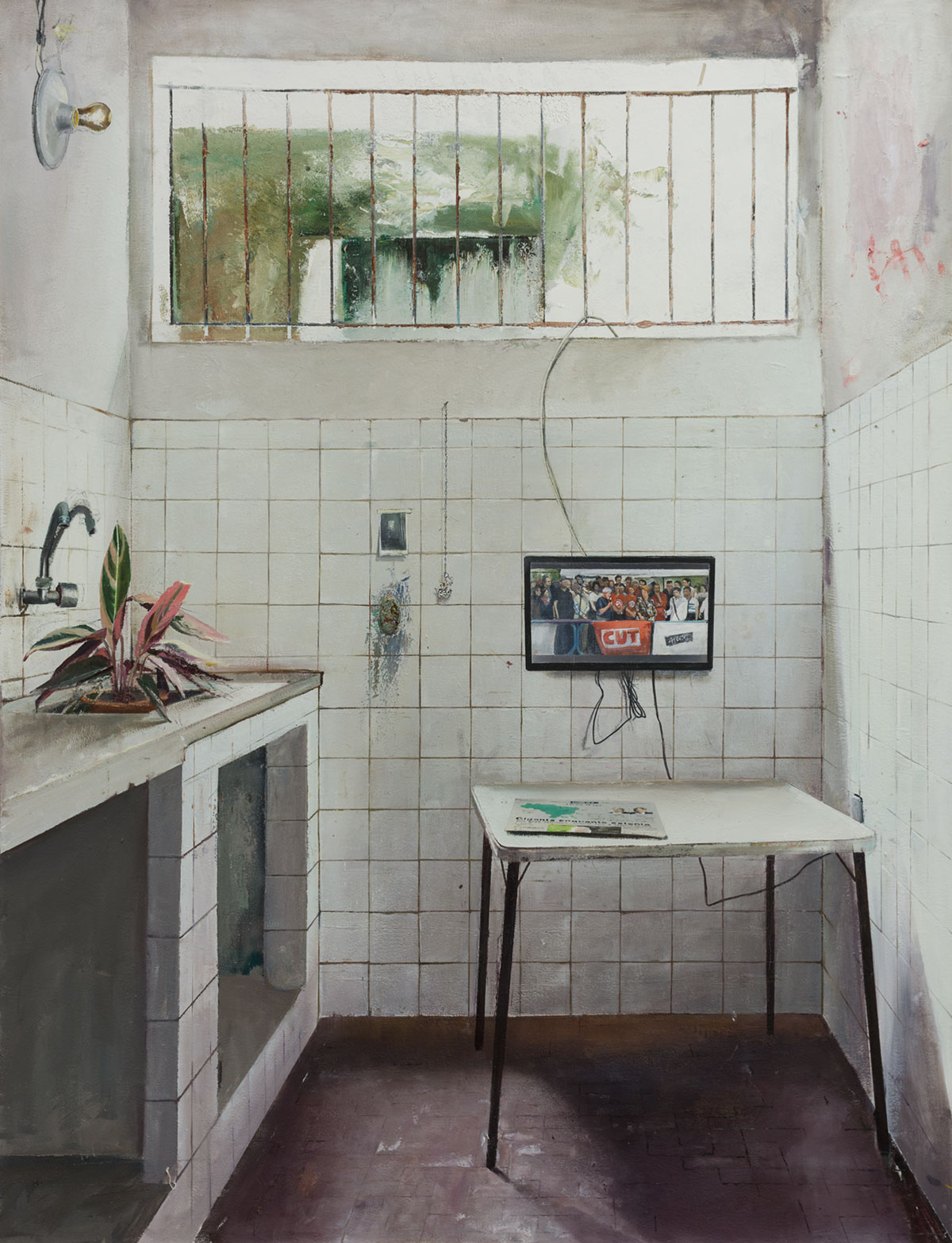
O golpe, a prisão e outras manobras incompatíveis com a democracia
2018 | Oil on canvas
The work depicts former president Lula speaking on the platform set up in the courtyard of the ABC Metalworkers Union before his arrest in 2018, in the city of São Bernardo do Campo, an emblematic space of struggle for the return of democracy in Brazil at the end of the military regime. Framed by a television, the image highlights the levels of mediation between the audience and the themed political event. Thus, the painting mobilizes the historical genre in times of fake news, narrative conflicts and contest for hegemony between social media sites and mainstream telecommunication outlets.
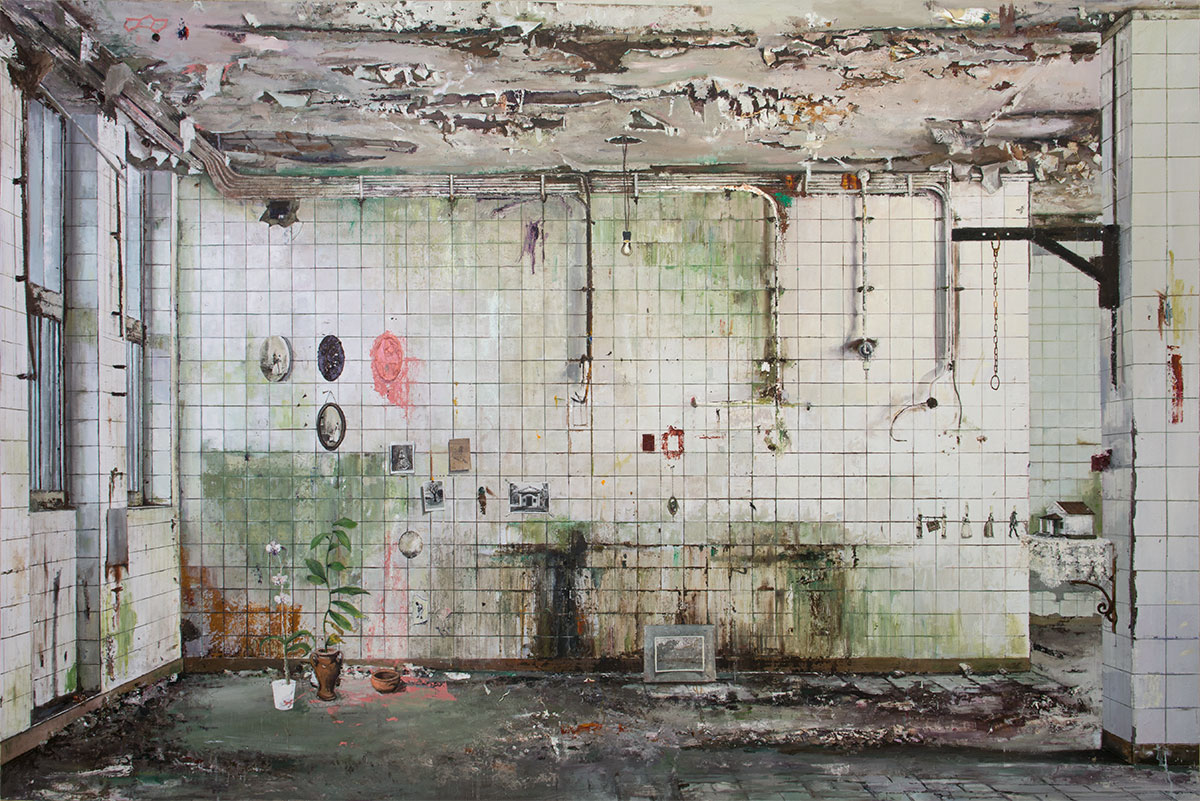
Percorrer tempos e ver as mesmas coisas
2017 | Oil on canvas
The images in the work are part of the artist’s iconographic research of photographs, paintings, drawings and architecture of Brazil’s colonial and imperial past. The characters in these images—patriarch, wife, children, slaves, bastard son, church representatives and politicians—serve as reference points for narratives that, besides exposing Brazil’s past social structure, shed light on social inequalities of the present and testify to the immutability of the state of affairs in the country. The work is part of the eponymous series.
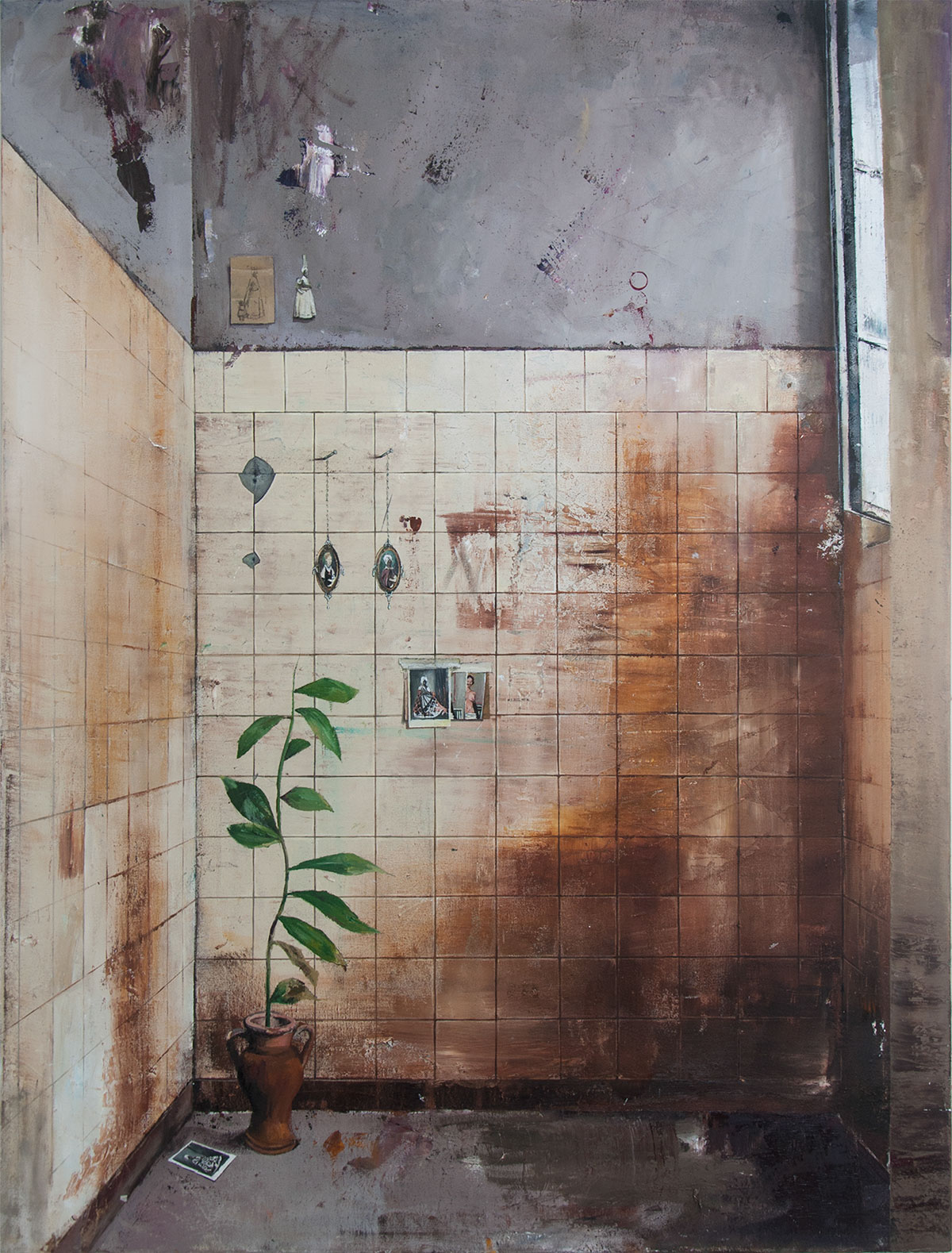
Uma cor para cada erro cometido
2017 | Oil on canvas
The work is part of the Percorrer Tempos e Ver as Mesmas Coisas [Exploring Ages and Seeing the Same Things] series, in which the artist draws on iconographic research on Brazil’s colonial and imperial past, investigating the photography, architecture and arts of those historical periods and bringing into private settings the collective imagination of a decadent but permanent slave society. It thus explores the self-feeding resilience of a social structure that survives historical evolution.