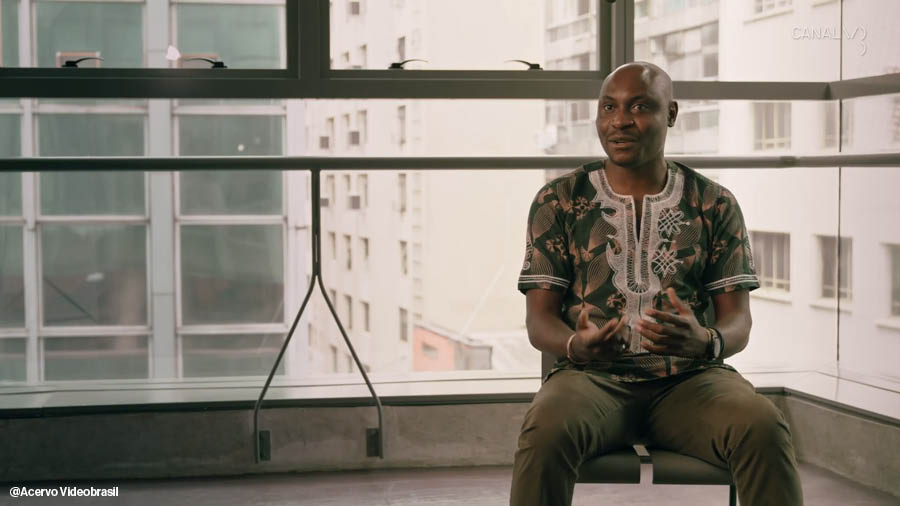
Georges Senga
1983 | Lubumbashi, Democratic Republic of the Congo | Lives in Lubumbashi
SOBRE | DEPOIMENTO
A photographer, he graduated in languages from the University of Lubumbashi. His work explores affective vestiges in abandoned landscapes. He has taken part in the biennials of Lubumbashi (2010 and 2015), Bamako (2011 and 2015) and Kampala (2014), and in festivals and exhibitions in several African and European countries such as South Africa, Ethiopia, Spain and Switzerland.
This House is Not For Sale and For Sale, the work I present at the 21st Biennial, comes from a personal experience about our family home a few years ago. One of my uncles had bought a new house for my grandmother, and as the family was composed of rich and poor people, the rich side wanted to sell the house, and the poor side wanted to keep the house. To settle, they wrote in the front of the house "This house is not for sale." This sentence is a real situation that is exploited through the conflict of inheritance situations in different parts of the Congo and in Africa in general, to show to the buyers of these houses that investing money is a matter of loss.
My work often questions memory, as is the case of this series of photographs. Firstly, I questioned the value of the property, through the effort that the parents put in to provide us with an important family heritage that makes our own history through generations. I have been interested in the interior of the houses as well, because at the same time there is our own history and childhood memory alongside it. These objects found in the interior of the houses have the same value as the house itself, their selling this house or those houses is a matter of memory and our own material stories that fade.
As the situation of inheritance conflict is everywhere in the world, but presents itself differently, this piece has two parts, one in the Congo, the other in Brazil. I know the reality of this situation in Africa, so I postulated the question of knowing how can we find this representation outside of Africa. I chose Brazil for a more historical reason, in relation to its very foundation and the link between the country and the African continent. In Brazil, I came across some real estate investments in Praia Grande that created a direct link with my experience in Congo, not by finding buildings that are not for sale, but by the way both contexts deal with its objects and personal history.
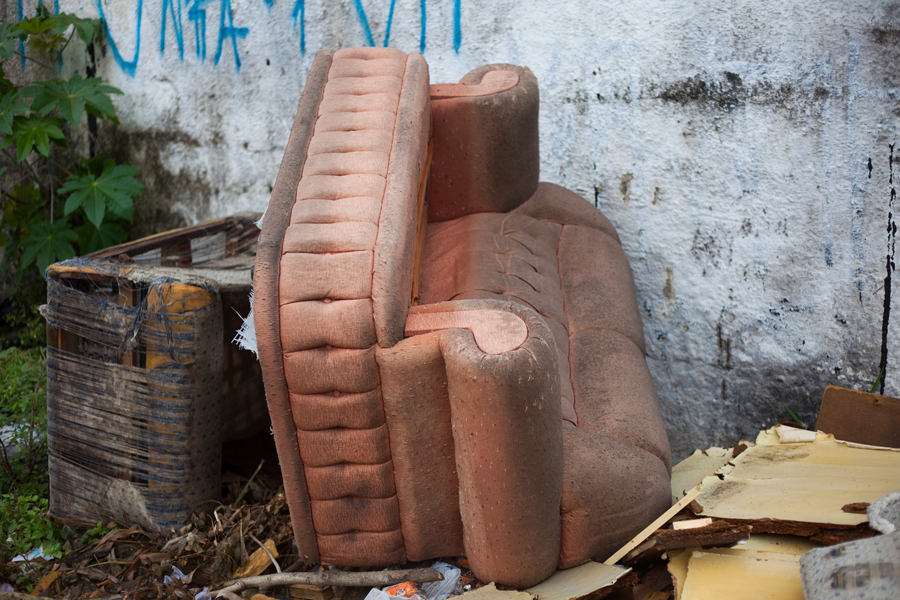
Cette maison n’est pas à vendre et à vendre
2016 | Photograph; nine triptychs
Two situations of conflict over urban territory compose the series. In Lubumbashi, in the Democratic Republic of Congo, the photographer came across several houses with the sentence “Cette maison n’est pas à vendre” [This house is not for sale] haphazardly painted on the front. Objects of family inheritance disputes, these houses were photographed inside and outside, documenting the memories and attachment of residents to their homes. In the city of Praia Grande (on the coast of the state of São Paulo, Brazil), in turn, amidst a context of rapid urban change, the photographer documented the fronts and surroundings of houses that are indeed for sale. In this case, the potential memories and fondness evoked by the buildings, and also their walls, will soon disappear.