chameckilerner
1992 | Brazil | The artists live in New York, USA
SOBRE | DEPOIMENTO
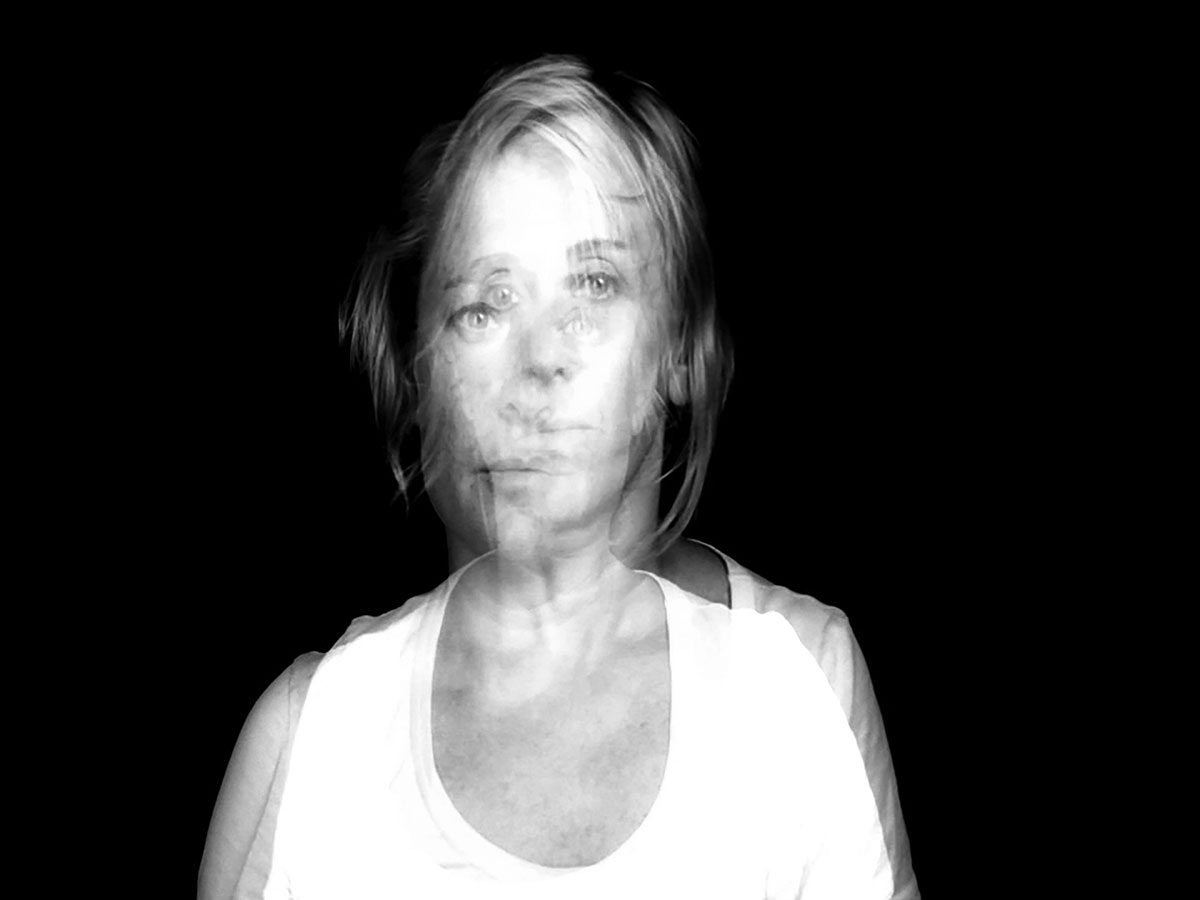
The duo is formed by the artists Rosane Chamecki (Curitiba, 1964) and Andrea Lerner (Curitiba, 1966), moving between dance and video. In their works, the body and its kinetic qualities are explored to pose questions related to forms of relationship to self and others. They began their artistic research in contemporary dance with pieces commissioned by Balé de Teatro Guaíra and the American Dance Festival, among others, being awarded in several international festivals. In 2007 they started making video, with works combining dance, performance and video installation. Their films were shown and awarded at the IX Barcelona International Video Art Festival (2016); Soft Power Arte Brazil, Kunsthal KAdE, Amerfoort, Netherlands (2016); and Leeds International Film Festival, United Kingdom (2016). They had works broadcast on TV in the UK, the US, Australia and the Netherlands.
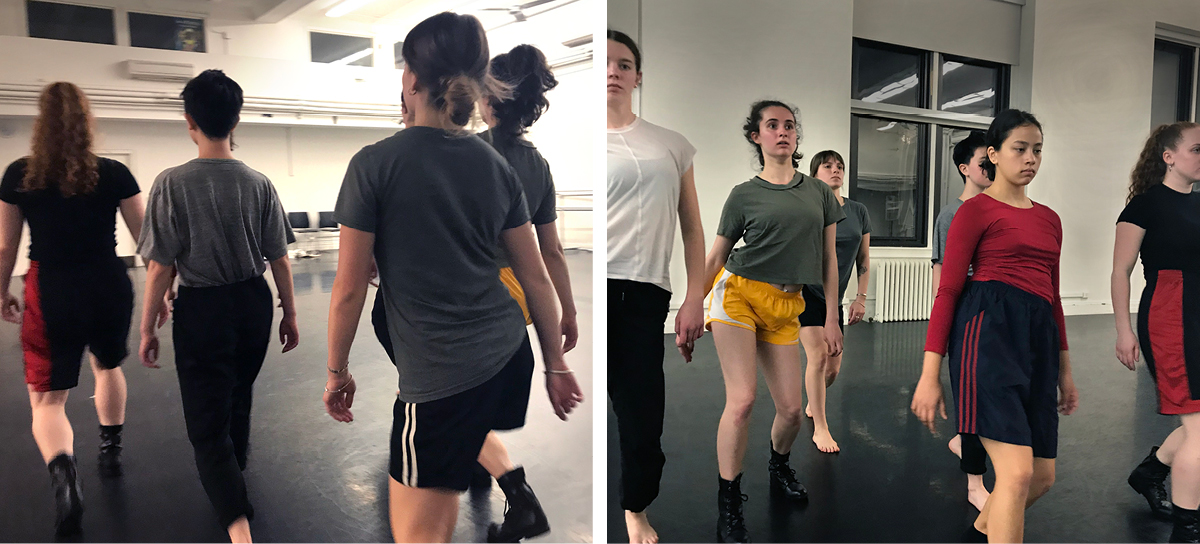
#RESISTA is part of a series (RESIST) initially created for the Women’s March, held in January 2017 in Washington and several cities worldwide. The march was organized in reaction to Donald Trump’s election as US president and his offensive attitudes towards women, homosexuals and trans people, positions deeply related to body autonomy.
In this installation we give viewers the opportunity to become participants/activists by joining this “imaginary march.” Our bodies are sociopolitical for being identified, represented and absorbed within the social and cultural parameters of each specific group: in the feminist cause, the pelvis is literally the outer shell of our reproductive system, and consequently the perfect weapon for a protest regarding autonomy and reproductive rights. In the LGBTQIA cause, the pelvis is at the core of the gender identity controversy, no longer having an absolute function of identification.
#RESISTA is an auditory instigation and we view it as social action in the collective imagination, mainly because it involves no immediate action. The moment we insert this provocation in a public space, it no longer belongs only to us. On deciding to take part, spectators become actual activists, i.e., they have power of judgment, but also participants required for the artwork to exist within the space of the 21st Biennial, at that moment. In spite of that, we know that not all listeners will take the initiative, have the comfort level needed to participate or even accept the prerogative. However, we believe that passive listeners internalize the work, even if they leave it unfinished. “Non-participation” is inverse participation—the negative space of an image. In this specific work, the appeal lies not only in the space, which is not intended for dance, but also in the body that is not organized to dance.
#RESISTA
2018 | Sound piece; audio in loop, 2’30’’
The voice suggests an event integrating people of all genders, describing choreographic details. The lower part of the pelvis, moving parallel to the floor, acts as a pencil tip, writing the word RESIST. The body expresses itself as discourse, shifting the inner self and transforming it into group action. The lower parts of the hips allude to a group of symbolisms such as femininity, stability, fertility and sexuality. By emphasizing vigorous and resolute movement, the work alludes to the sociopolitical aspect of the body.